
The UAE plays a central role in regional and global trade, with ports, logistics hubs, and free zones handling vast volumes of cargo every day. Among these shipments are dangerous goods that require specialized storage, strict controls, and continuous monitoring.
Managing hazardous materials is not simply an operational challenge. It is a regulatory, safety, and reputational responsibility that demands robust systems and disciplined processes.
The Complexity of Dangerous Goods in High-Volume Trade Environments
Ports and logistics hubs handle diverse categories of hazardous materials, including chemicals, flammable substances, and reactive compounds. Each class comes with specific storage and handling requirements.
In high-volume environments, the risk is compounded by throughput pressure. Storage solutions must allow efficient movement while preventing cross-contamination or unsafe proximity between incompatible materials.
Effective dangerous goods storage and handling balances operational speed with uncompromising safety controls.
Regulatory Framework Governing Hazardous Storage
The UAE enforces strict regulations aligned with international standards for hazardous materials management. Ports and free zones are required to demonstrate compliance through documentation, facility design, and operational procedures.
These regulations dictate storage conditions, segregation distances, ventilation, spill containment, and emergency access. Non-compliance can result in severe penalties or operational shutdowns.
Facilities handling hazardous chemical storage must embed regulatory requirements into daily operations rather than treating them as periodic checks.
Facility Design and Storage Infrastructure
Infrastructure plays a critical role in managing risk. Dedicated storage areas, secondary containment systems, and fire-resistant construction are standard features in compliant facilities.
Storage layouts are designed to separate incompatible substances and limit exposure in case of incidents. Environmental controls, such as temperature and humidity management, further reduce risk.
Purpose-built storage solutions allow ports and logistics hubs to manage dangerous goods without disrupting general cargo operations.
Operational Controls and Access Management
Beyond physical infrastructure, operational discipline is essential. Access to hazardous storage areas is tightly controlled to limit exposure to trained personnel only.
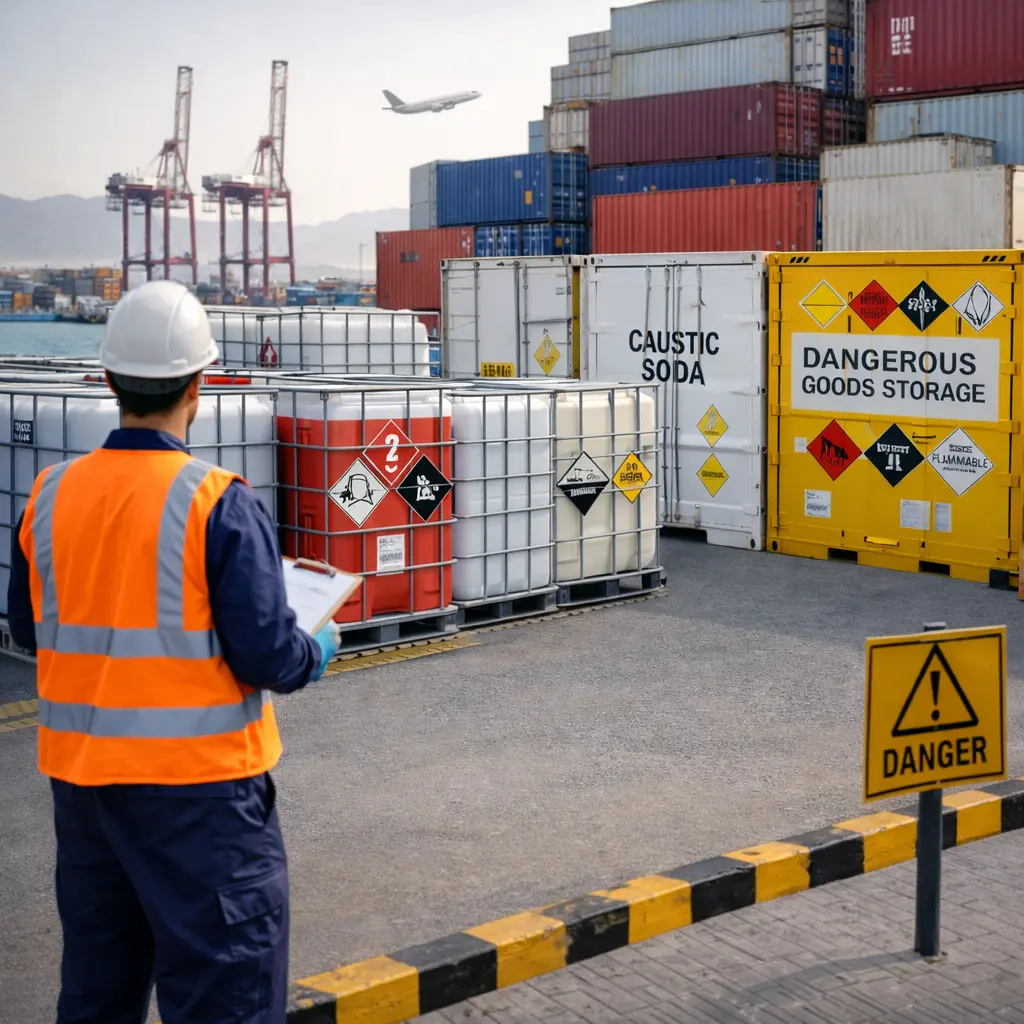
Clear labelling, inventory tracking, and controlled movement protocols reduce the likelihood of errors during handling. Regular inspections ensure storage conditions remain within acceptable limits.
These controls help logistics teams maintain safety without slowing throughput.
Monitoring, Emergency Preparedness, and Response
Continuous monitoring allows early detection of leaks, temperature deviations, or containment failures. Sensors, alarms, and inspection routines provide critical visibility into storage conditions.
Emergency preparedness is equally important. Facilities maintain response plans, trained teams, and equipment to manage spills or incidents quickly.
Preparedness reduces the impact of incidents and protects personnel, assets, and surrounding infrastructure.
Coordination Between Ports, Free Zones, and Logistics Operators
Dangerous goods often move across multiple facilities before reaching their destination. Coordination between ports, free zones, and logistics operators ensures consistent safety standards throughout the supply chain.
Shared documentation, standard operating procedures, and communication protocols reduce risk during transfer and storage transitions.
This coordinated approach strengthens overall compliance and operational reliability.
How Shipping Companies Support Safe Hazardous Storage Operations
Managing dangerous goods requires specialised systems, expertise, and ongoing oversight. Generic storage solutions are not sufficient for high-risk materials.
Tlmifs supports ports, logistics hubs, and free zones with solutions designed for compliant hazardous chemical storage and controlled dangerous goods storage and handling. By aligning infrastructure, operations, and regulatory requirements, TLM Logistics helps organizations maintain safety while supporting the UAE’s critical trade ecosystem.