


Dubai has grown into one of the world’s most important trade corridors, connecting businesses across Asia, Europe, Africa, and the Americas. Whether you are importing raw materials or exporting finished goods, understanding how freight forwarding works is essential for running a smooth supply chain. If you are looking for a reliable logistics company in Dubai, this guide will walk you through everything you need to know from how freight forwarding operates to why Dubai is at the heart of global trade.
What is Freight Forwarding?
Freight forwarding is the process of organising the shipment of goods from one location to another on behalf of a business or individual. A freight forwarder acts as the middleman between you, the shipper and the various carriers, customs authorities, and logistics partners involved in moving your cargo.
Think of a freight forwarder as the project manager of your shipment. They do not physically move the cargo themselves. Instead, they coordinate every step of the journey from booking space on a ship or aircraft, handling paperwork, arranging customs clearance, and ensuring your goods arrive at the right place at the right time.
For businesses trading in or through Dubai, working with a knowledgeable freight forwarder is one of the smartest decisions you can make.
Why Dubai Is a Global Freight Hub
Dubai’s location is one of its greatest advantages. Sitting at the crossroads of the East and West, it provides direct access to over two billion consumers within a four-hour flight radius. This strategic positioning makes Dubai a natural gateway for international trade.
A few key factors make Dubai stand out as a freight and logistics powerhouse:
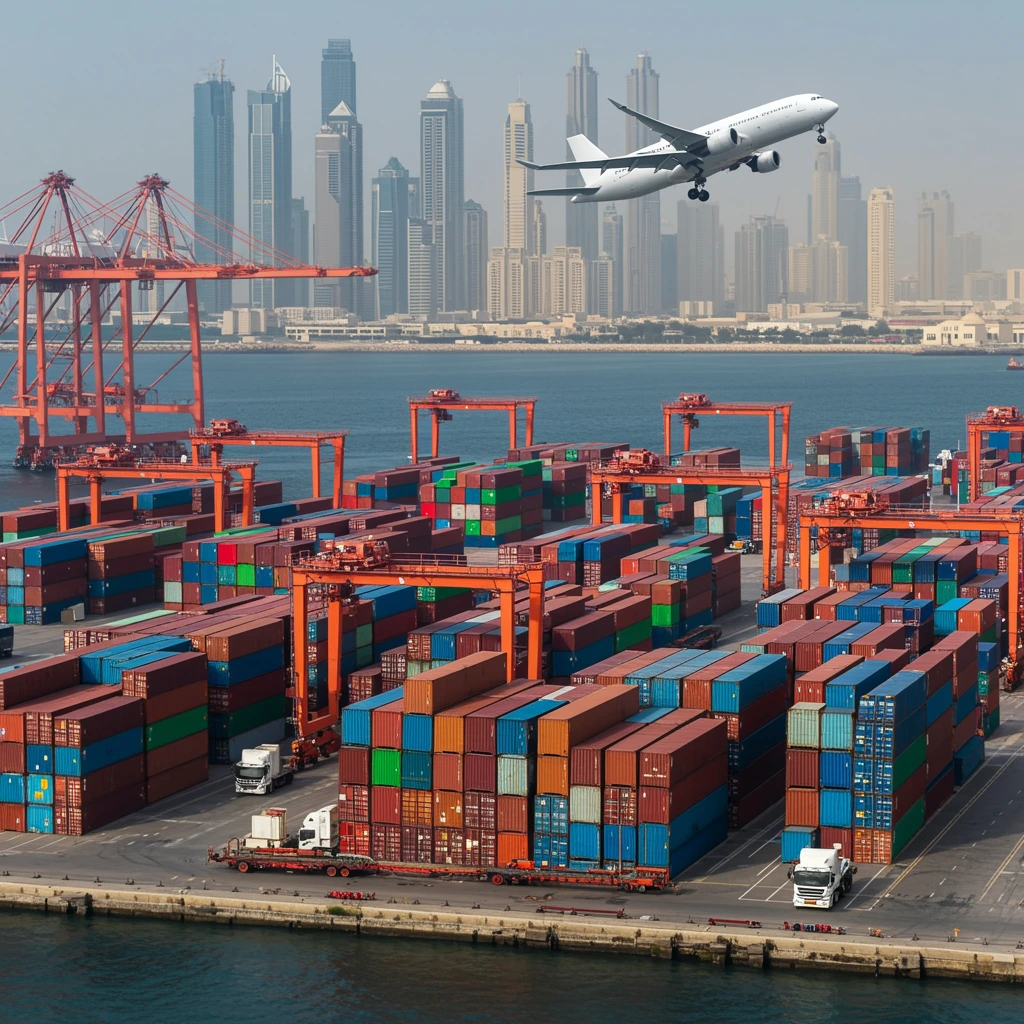
- Jebel Ali Port: One of the largest ports in the world, Jebel Ali handles tens of millions of containers every year and serves as a critical hub for sea freight across the Middle East, Africa, and South Asia.
- Dubai International Airport (DXB): One of the busiest cargo airports globally, DXB connects Dubai to hundreds of destinations, making it ideal for time-sensitive shipments.
- Jebel Ali Free Zone (JAFZA): One of the world’s leading free zones, JAFZA offers tax benefits, streamlined import/export procedures, and world-class infrastructure for businesses of all sizes.
- Business-Friendly Policies: The UAE government has consistently invested in trade infrastructure, making it one of the easiest places in the world to move goods efficiently.
Step-by-Step: How Freight Forwarding Works in Dubai
Here is a simple breakdown of the freight forwarding process from start to finish:
Step 1: Booking and Planning
The process begins when you contact a freight forwarder with your shipment details — what you are shipping, where it is going, how much it weighs, and your delivery deadline. Based on this, the forwarder will recommend the best mode of transport and provide a quote.
Step 2: Documentation
Freight forwarding involves a significant amount of paperwork. Your freight forwarder will prepare and manage documents such as the Bill of Lading, Commercial Invoice, Packing List, Certificate of Origin, and customs declarations. Getting documentation right is critical — errors can cause costly delays at customs.
Step 3: Pickup and Consolidation
The freight forwarder arranges for your cargo to be collected from your warehouse or supplier. If your shipment is smaller and does not fill an entire container, your goods may be consolidated with other shipments (known as LCL- Less than Container Load) to reduce costs.
Step 4: Customs Clearance
This is one of the most important stages of the process. All goods entering or leaving Dubai must comply with UAE customs regulations. Your freight forwarder will submit the required documents, calculate applicable duties and taxes, and ensure your cargo clears customs without unnecessary hold-ups. Having a local expert who understands UAE customs is invaluable at this stage.
Step 5: Freight Movement
Once customs clearance is complete, your cargo is loaded onto the chosen mode of transport. Dubai offers excellent connectivity across all freight modes. For urgent shipments, air freight is the fastest option, routing goods through Dubai International Airport or Al Maktoum International Airport. Sea freight via Jebel Ali Port is ideal for larger, heavier shipments where cost efficiency matters more than speed. Road freight is also widely used for cargo moving across the GCC region.
Step 6: Last-Mile Delivery
The final step is delivering your goods to the destination address. Your freight forwarder coordinates last-mile logistics, ensuring the cargo arrives safely and on time. Most forwarders also provide real-time tracking so you can monitor your shipment every step of the way.
Types of Freight Services Available in Dubai
Dubai-based freight forwarders typically offer a full range of services to meet different cargo needs:
- Air Freight: Best for high-value, time-sensitive, or perishable goods. Dubai’s airports offer exceptional global connectivity.
- Sea Freight (FCL & LCL): Ideal for large volume shipments. FCL (Full Container Load) is cost-effective for big cargo, while LCL suits smaller consignments.
- Land/Road Freight: Commonly used for cross-border shipments within the GCC countries such as Saudi Arabia, Oman, and Kuwait.
- Multimodal Freight: A combination of two or more transport modes, offering flexibility and efficiency for complex supply chains.
Why Work With a Freight Forwarder in Dubai?
Many businesses attempt to manage their own shipments and quickly discover how complex the process can be. A professional freight forwarder saves you time, money, and significant stress. Here is why partnering with one makes sense:
- Local expertise: Deep knowledge of UAE customs regulations, free zone rules, and port procedures.
- Cost efficiency: Freight forwarders have established relationships with carriers and can negotiate better rates than you would get on your own,
- End-to-end visibility: Track your shipment in real time and receive updates at every milestone.
- Risk management: Freight forwarders handle insurance, documentation, and compliance, reducing the risk of costly errors or delays.
How TLM Logistics Can Help
At TLM Logistics, we specialise in making freight forwarding simple, transparent, and stress-free for businesses of all sizes. Whether you need to ship a single pallet or manage a complex supply chain, our team of experts is here to handle every detail from documentation and customs clearance to final delivery.
We offer comprehensive freight solutions including air freight, sea freight, road freight, and multimodal logistics all backed by our local knowledge of the Dubai and UAE market.
Ready to simplify your next shipment? Get in touch with TLM Logistics today and let us take care of the rest.
Conclusion
Freight forwarding in Dubai is a well-structured process built on one of the world’s most advanced trade ecosystems. From booking and documentation to customs clearance and last-mile delivery, every step is designed to move your goods efficiently across the globe. By working with an experienced freight forwarder, you gain a trusted partner who handles the complexity so you can focus on growing your business.