

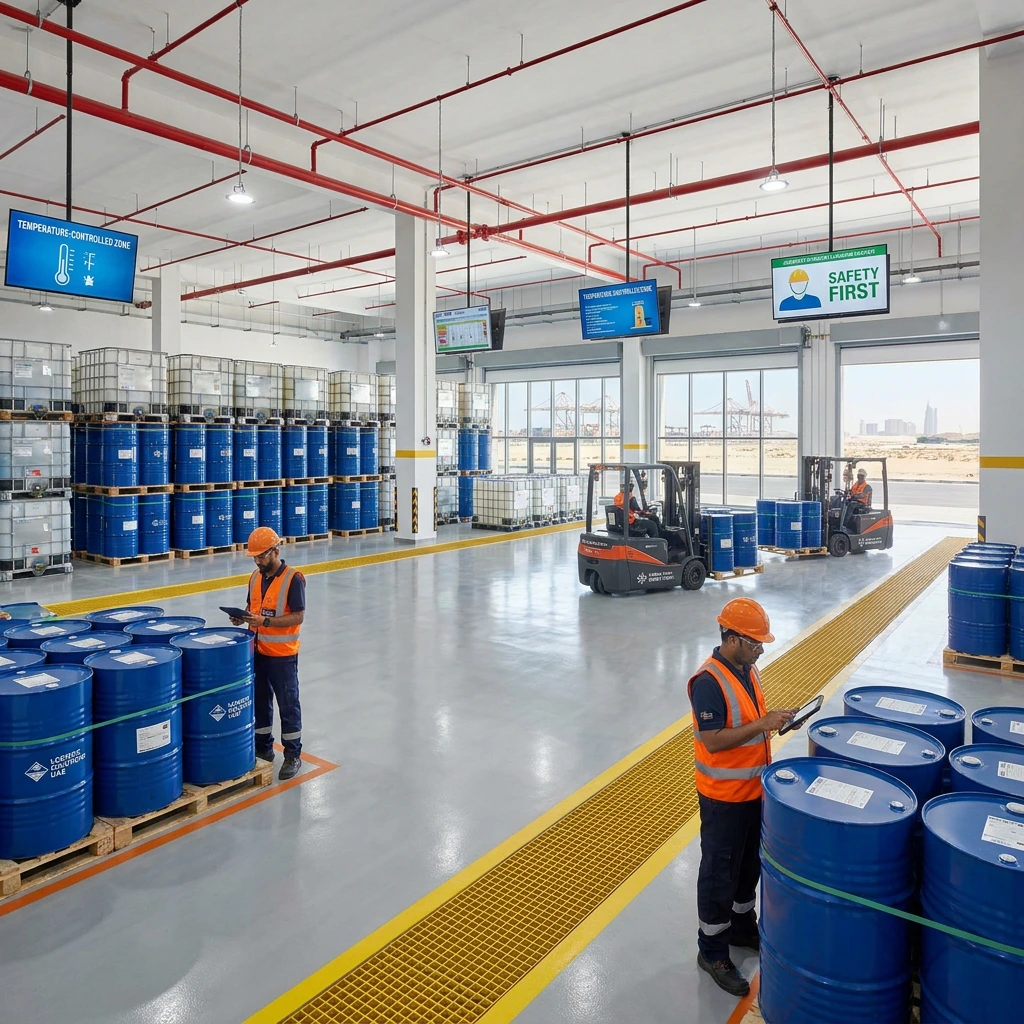
The UAE is one of the Middle East’s largest trade and industrial hubs. Chemicals move daily through ports, airports, and free zones across Dubai and Abu Dhabi. This creates strong demand for safe storage, handling, and transportation solutions. Businesses working with chemical logistics depend on specialized warehousing systems to move cargo safely and efficiently.
The country’s logistics sector contributes nearly 12% of the UAE’s GDP, supported by advanced ports and industrial zones. Chemical storage facilities play a major role in supporting manufacturing, oil and gas, pharmaceuticals, and industrial trade.
What Is Chemical Cargo Warehousing?
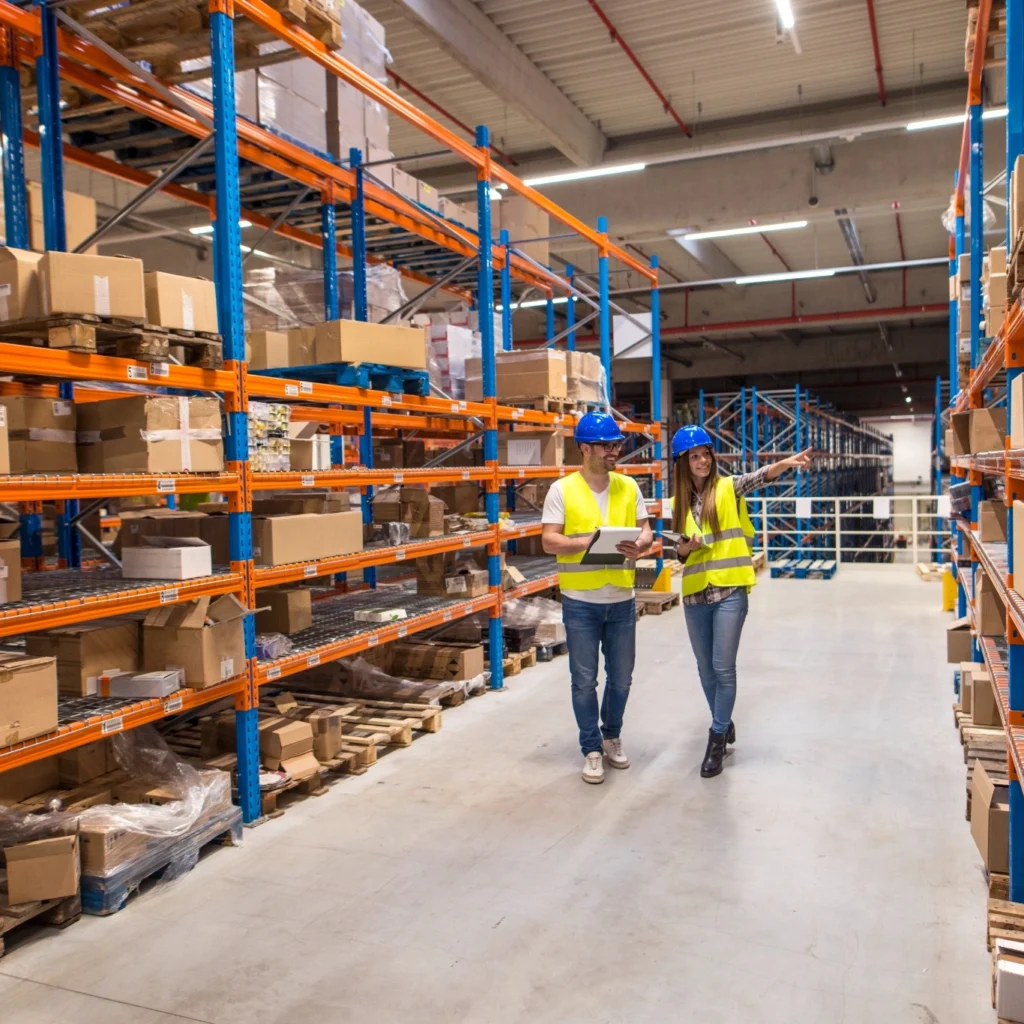
Chemical cargo warehousing is the process of storing industrial chemicals in controlled facilities before distribution or export. These warehouses are built to handle different chemical classes safely while reducing risks during storage and movement.
Unlike standard warehouses, chemical facilities use dedicated storage methods based on product type. Some chemicals require temperature-controlled zones. Others need isolated sections with spill protection systems.
Warehouses in the UAE commonly support:
- Industrial chemicals
- Petrochemicals
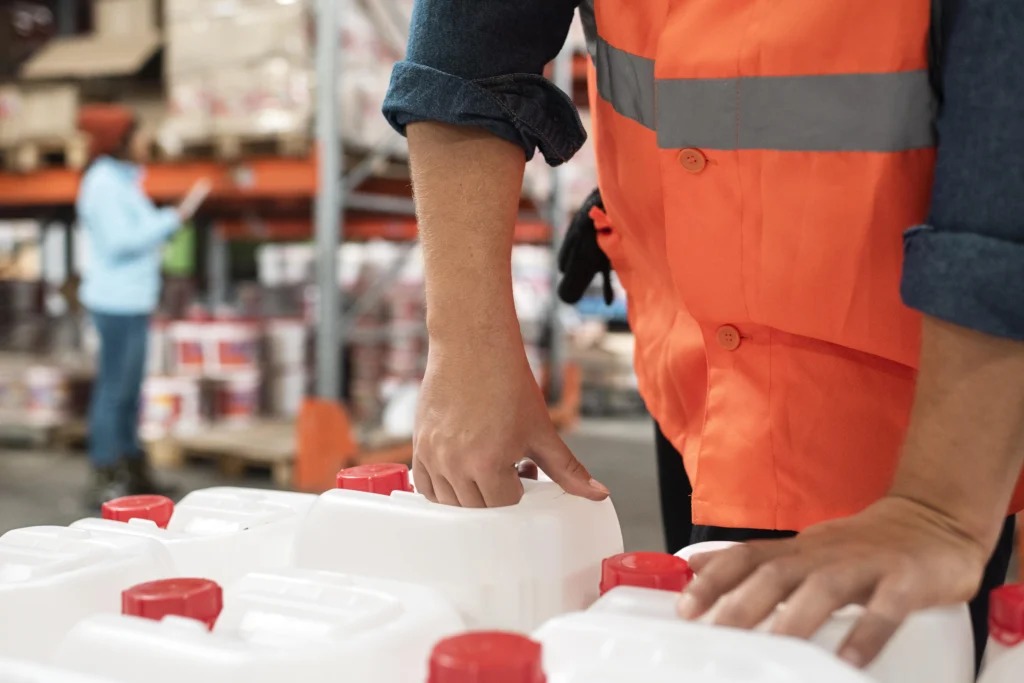
- Cleaning products
- Paint materials
- Solvents
- Pharmaceutical ingredients
- Hazardous materials
Many facilities are located near Jebel Ali Port, Khalifa Port, and industrial free zones for faster cargo movement.
Why Is the UAE a Major Hub for Chemical Warehousing?
The UAE’s location makes it ideal for chemical trade between Asia, Africa, and Europe. Ports, airports, and road networks help companies move cargo quickly across global markets.
Dubai and Abu Dhabi have invested heavily in logistics infrastructure over the last decade. Jebel Ali Port alone handles millions of containers every year.
The chemical industry also contributes significantly to the UAE economy. Abu Dhabi’s chemical sector represented 53% of manufacturing GDP in 2021.
Key reasons companies choose UAE warehousing include:
| Advantage | Benefit |
| Strategic location | Faster shipping between global markets |
| Modern ports | Smooth import and export operations |
| Free zones | Easier international trade |
| Advanced infrastructure | Faster cargo handling |
| Specialized storage facilities | Better handling of sensitive materials |
The UAE chemical logistics market is projected to reach USD 14.26 billion by 2029.
How Does the Chemical Warehousing Process Work?
Chemical warehousing follows a structured process from cargo arrival to final dispatch. Every step focuses on safety, documentation, and proper handling.
1. Cargo Arrival and Inspection
The process starts when chemicals arrive through sea freight, air freight, or land transport. Warehouse teams inspect shipment documents, labels, and packaging conditions immediately.
Cargo is checked for:
- Leakage
- Damage
- Correct labeling
- Product classification
- Safety documentation
Warehouses also verify Material Safety Data Sheets before accepting cargo.
2. Product Classification
Chemicals are grouped based on hazard category and storage requirements. Different products cannot always be stored together.
For example:
| Chemical Type | Storage Requirement |
| Flammable liquids | Fire-resistant zones |
| Corrosive products | Isolated containment areas |
| Temperature-sensitive chemicals | Climate-controlled storage |
| Toxic substances | Restricted access sections |
This step reduces the risk of reactions between incompatible materials.
3. Safe Storage Allocation
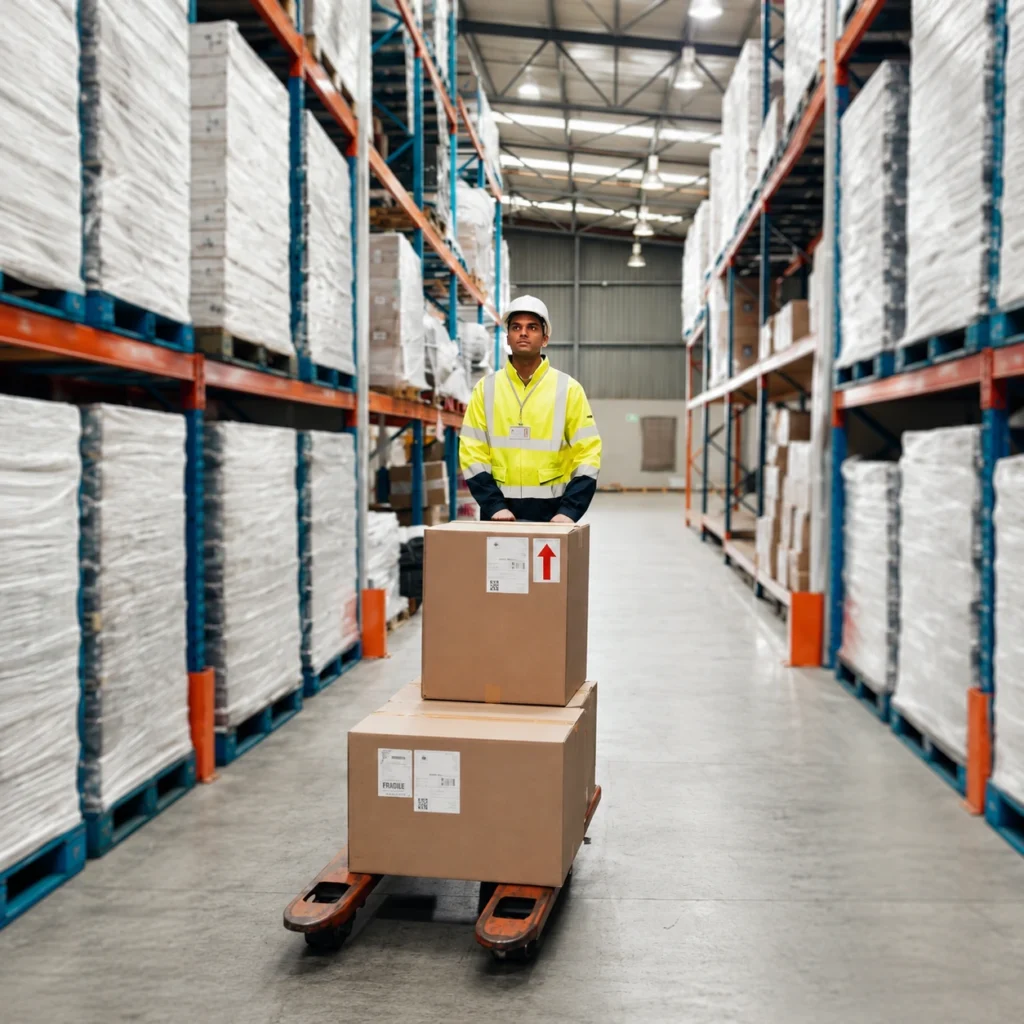
After classification, cargo is moved into assigned storage zones using forklifts or pallet systems. Warehouses use special flooring, spill trays, and ventilation systems for added protection.
Many UAE facilities also include:
- Fire suppression systems
- Gas detection systems
- Emergency exits
- Secondary containment barriers
- 24/7 monitoring
Some warehouses provide separate indoor and outdoor storage depending on cargo type.
How Are Dangerous Chemicals Managed?
Hazardous chemicals require stricter handling procedures because they can affect people, property, and the environment. UAE warehouses follow international safety standards for dangerous goods storage.
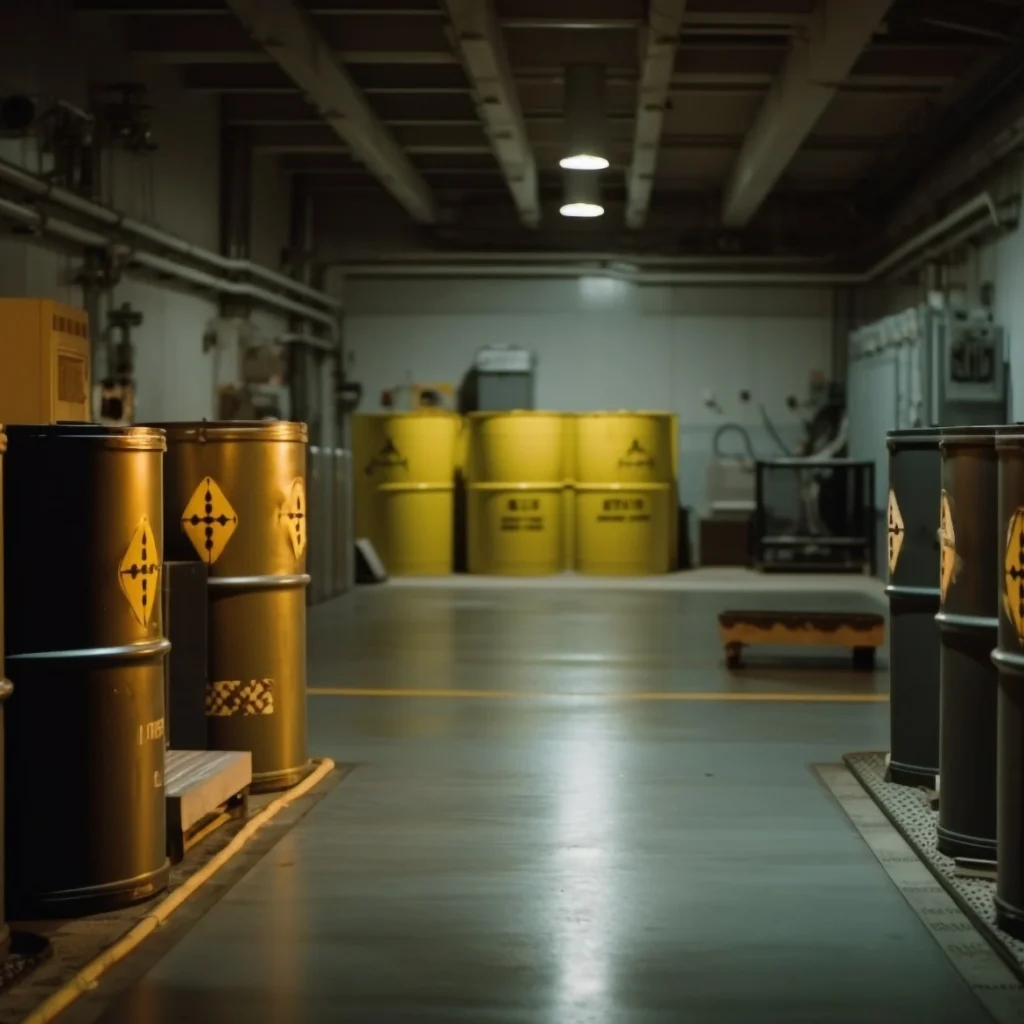
Chemical DG cargo is usually stored in dedicated zones with controlled access and emergency response systems.
Warehouse staff receive training in:
- Hazard handling
- Spill response
- Fire safety
- Emergency evacuation
- Chemical segregation
Facilities also maintain clear labeling systems for faster identification during inspections or emergencies.
What Technologies Are Used in UAE Chemical Warehouses?
Modern chemical warehouses use technology to improve cargo tracking, inventory management, and operational efficiency. Many UAE logistics companies now use digital systems for real-time warehouse monitoring.
Technology commonly used includes:
- Warehouse Management Systems (WMS)
- Barcode and RFID tracking
- Temperature monitoring sensors
- CCTV surveillance
- Automated inventory reporting
According to industry reports, around 72% of logistics providers in the UAE have implemented digital tracking systems.
Real-time monitoring helps businesses reduce delays and improve stock visibility.
Which Industries Use Chemical Warehousing in UAE?
Chemical warehousing supports several industries across the UAE economy. Many businesses require temporary storage before production, distribution, or export.
Industries using chemical warehouses include:
- Oil and gas
- Manufacturing
- Pharmaceuticals
- Automotive
- Agriculture
- Construction
- Cosmetics
The UAE’s growing industrial sector continues increasing demand for specialized storage facilities.
What Are the Safety Features in Chemical Warehouses?
Safety is one of the most important parts of chemical cargo storage. Warehouses are designed to minimize accidents and protect workers, cargo, and nearby facilities.
Common safety features include:
| Safety Feature | Purpose |
| Fire-resistant walls | Limits fire spread |
| Spill containment systems | Controls liquid leaks |
| Ventilation systems | Reduces gas buildup |
| Emergency showers | Supports worker safety |
| Smoke detectors | Early fire detection |
| Temperature controls | Protects sensitive cargo |
Most facilities also conduct regular inspections and maintenance checks.
How Do Free Zones Support Chemical Warehousing?
Free zones help simplify import, export, and storage operations for international businesses. Areas like JAFZA and KIZAD are major centers for chemical storage and distribution.
Benefits of free zone warehousing include:
- Faster customs clearance
- Tax advantages
- Better port connectivity
- Large industrial storage spaces
- Easier international trade access
These zones attract manufacturers, distributors, and freight forwarding companies from across the region.
Challenges in Chemical Cargo Warehousing
Chemical warehousing requires careful planning because different products have different storage needs. High safety standards also increase operational costs.
Some common challenges include:
- Temperature control during summer
- Handling hazardous materials safely
- Storage segregation requirements
- Emergency preparedness
- Transportation coordination
Despite these challenges, UAE logistics providers continue investing in advanced facilities and technology.
Future of Chemical Warehousing in UAE
The future of chemical warehousing in the UAE looks strong due to industrial growth and increasing international trade. Expansion projects across ports and industrial zones continue attracting global chemical companies.
Growth is also supported by:
- Rising petrochemical exports
- Expanding manufacturing activity
- Advanced logistics infrastructure
- Increased warehouse automation
The UAE’s position between major international markets will continue driving demand for specialized chemical storage services.
Conclusion
Managing chemical cargo requires experience, proper infrastructure, and reliable handling systems. From storage and segregation to transportation and inventory management, every step matters in protecting cargo and maintaining smooth operations.
TLM Logistics provides professional warehousing and freight solutions for chemical cargo across the UAE. The company supports businesses with safe storage facilities, efficient cargo handling, and end-to-end logistics services tailored for industrial and hazardous materials.