

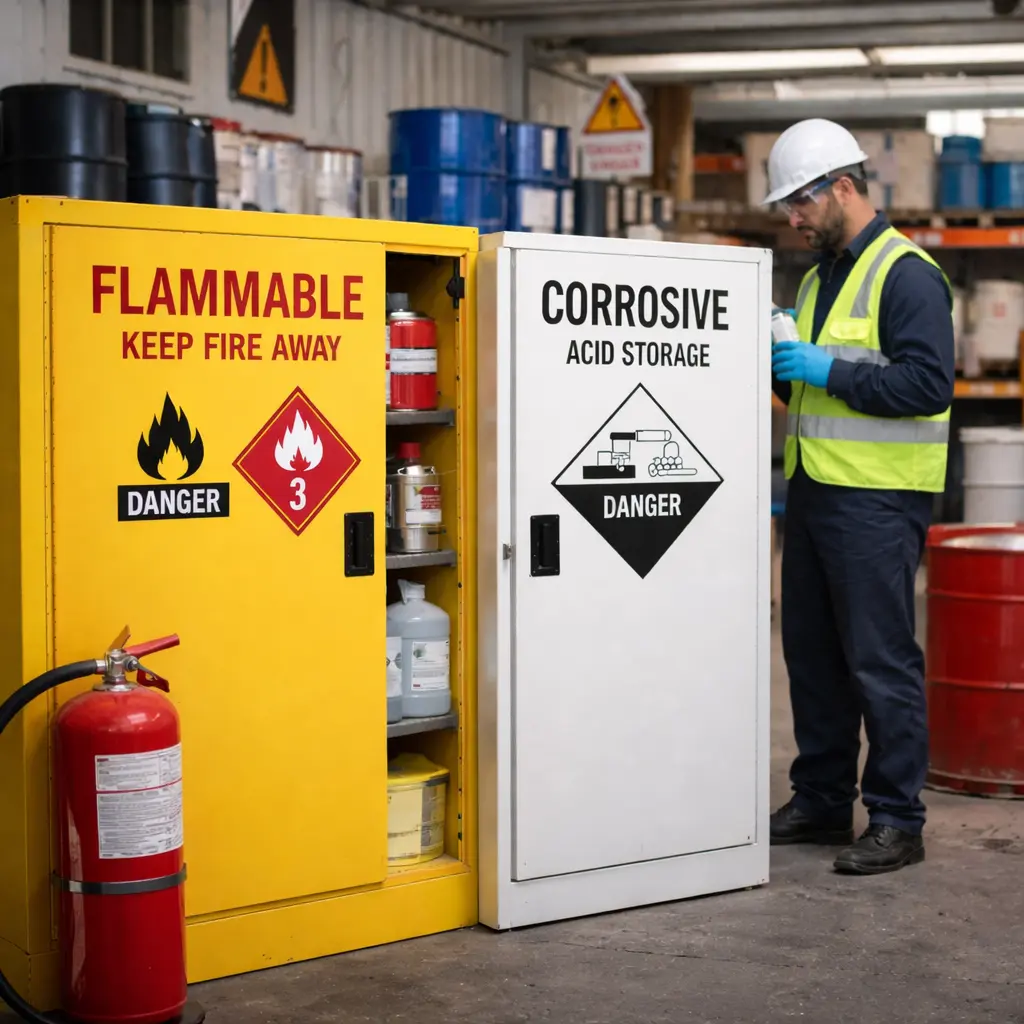
Facilities across the UAE handle a wide range of high-risk materials every day, from corrosive chemicals to flammable liquids and gases. These substances are essential for industrial, logistics, and manufacturing operations, but they also introduce serious safety and compliance risks if not managed correctly.
Effective corrosive and flammable storage is not just about containment. It requires a combination of engineered storage systems, operational discipline, and strict adherence to UAE and international safety standards to protect people, property, and the environment.
Why Corrosive and Flammable Materials Require Specialised Storage
Corrosive and flammable substances behave very differently from general cargo or standard chemicals. Corrosives can degrade containers, floors, and structural elements over time, while flammable materials pose immediate fire and explosion risks if exposed to heat or ignition sources.
Because of these risks, storage systems must be purpose-built. Generic shelving or warehouses increase the likelihood of leaks, reactions, or uncontrolled incidents, especially in high-temperature UAE conditions.
Regulatory Expectations in the UAE for High-Risk Storage
UAE authorities enforce strict regulations for the storage of hazardous substances, aligned with international frameworks such as ADR, IMDG, and local civil defence requirements. Facilities are expected to demonstrate compliance through both infrastructure and documented procedures.
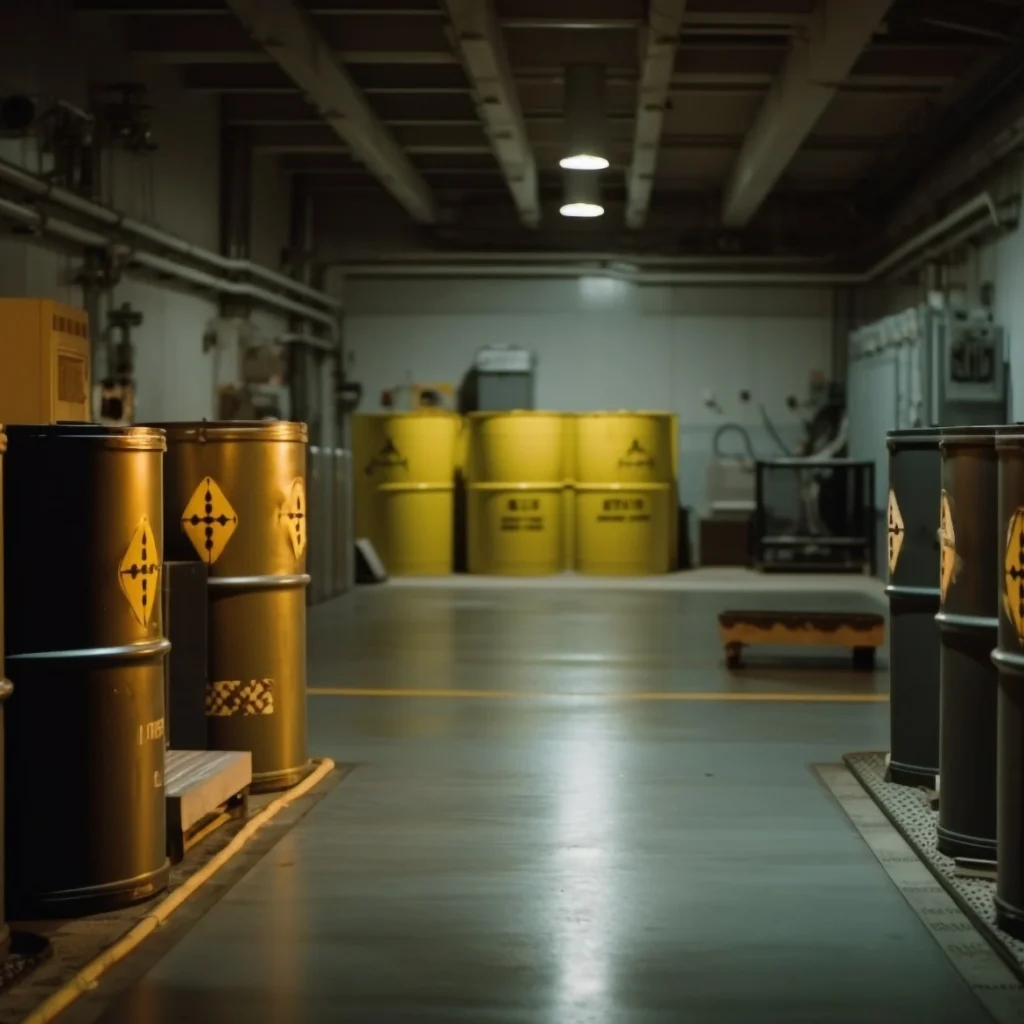
This includes clear segregation of incompatible materials, secondary containment, ventilation, fire protection systems, and emergency access. Proper dangerous goods storage and handling is audited not only during inspections, but also after incidents or near-misses.
Designing Storage Areas for Corrosive and Flammable Substances
Storage design plays a central role in risk reduction. The layout must prevent cross-contamination, allow safe access, and minimise exposure in case of spills or leaks.
Materials of construction are equally important. Cabinets, flooring, and containment systems must resist chemical attack while supporting fire-rated performance for flammable substances. Poor material selection often leads to long-term degradation and hidden safety risks.
Operational Controls That Reduce Daily Risk
Even the best storage systems fail without disciplined operations. Clear labelling, controlled access, and defined handling procedures are essential to prevent human error.
Facilities that manage high-risk materials safely rely on trained personnel, routine inspections, and clear escalation protocols. These controls ensure that small issues are addressed before they develop into serious incidents.
Monitoring, Ventilation, and Emergency Preparedness
Continuous monitoring helps detect leaks, vapour buildup, or temperature deviations early. Ventilation systems reduce the accumulation of flammable vapours, particularly in enclosed storage areas.
Emergency preparedness is equally critical. Facilities must maintain spill kits, fire suppression systems, and response plans tailored to the specific substances stored. Regular drills reinforce readiness and compliance.
Common Storage Mistakes Facilities Must Avoid
Many incidents arise from avoidable oversights rather than complex failures. Understanding common mistakes helps facilities strengthen their safety posture.
Typical issues include:
- Storing incompatible chemicals together
- Using non-resistant shelving or containers
- Inadequate ventilation in enclosed areas
- Poorly defined access controls and signage
Addressing these gaps significantly reduces operational risk.
Integrating Storage Safety Into the Wider Facility Environment
High-risk storage cannot exist in isolation. It must integrate with wider facility operations, including logistics flow, maintenance schedules, and emergency response planning.
Clear coordination between HSE teams, operations, and management ensures that safety measures remain effective as facility needs evolve.
How TLM Logistics Support Safe High-Risk Material Storage
Managing corrosive and flammable substances requires more than basic compliance. It requires systems designed specifically for risk control, durability, and regulatory alignment.
Timifs supports UAE facilities by delivering engineered solutions for corrosive and flammable storage, aligned with best practices for dangerous goods storage and handling. By combining safety-focused design with operational understanding, TLM helps organisations protect people, assets, and continuity in high-risk environments.